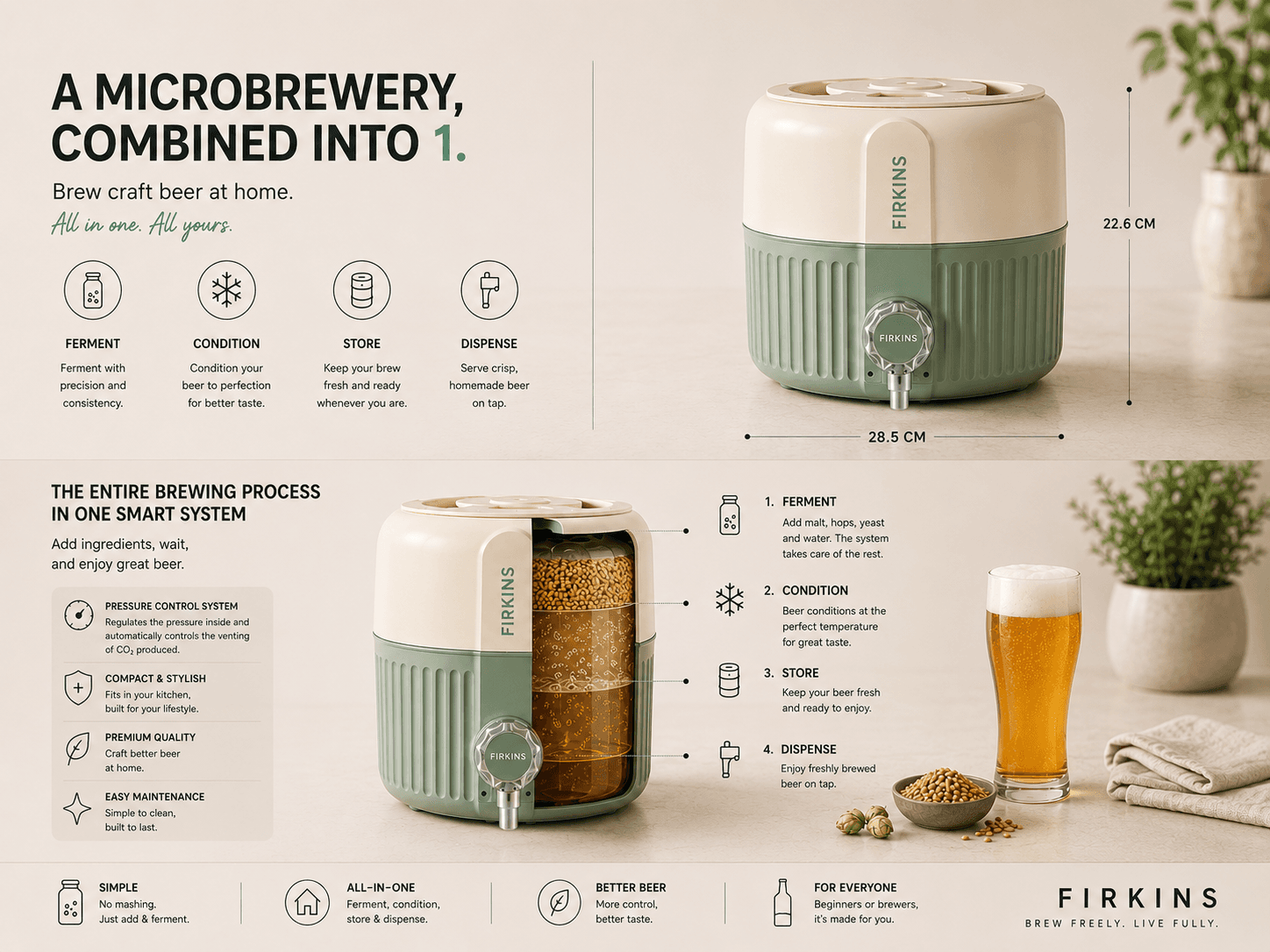
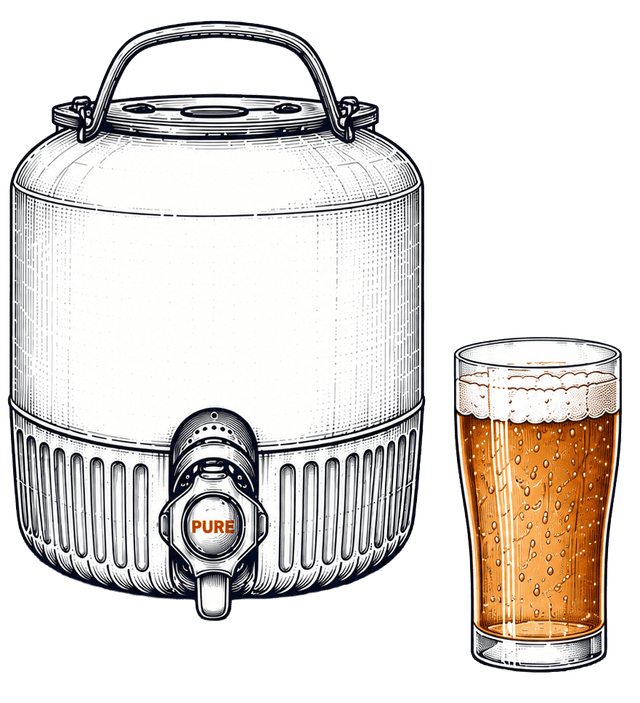
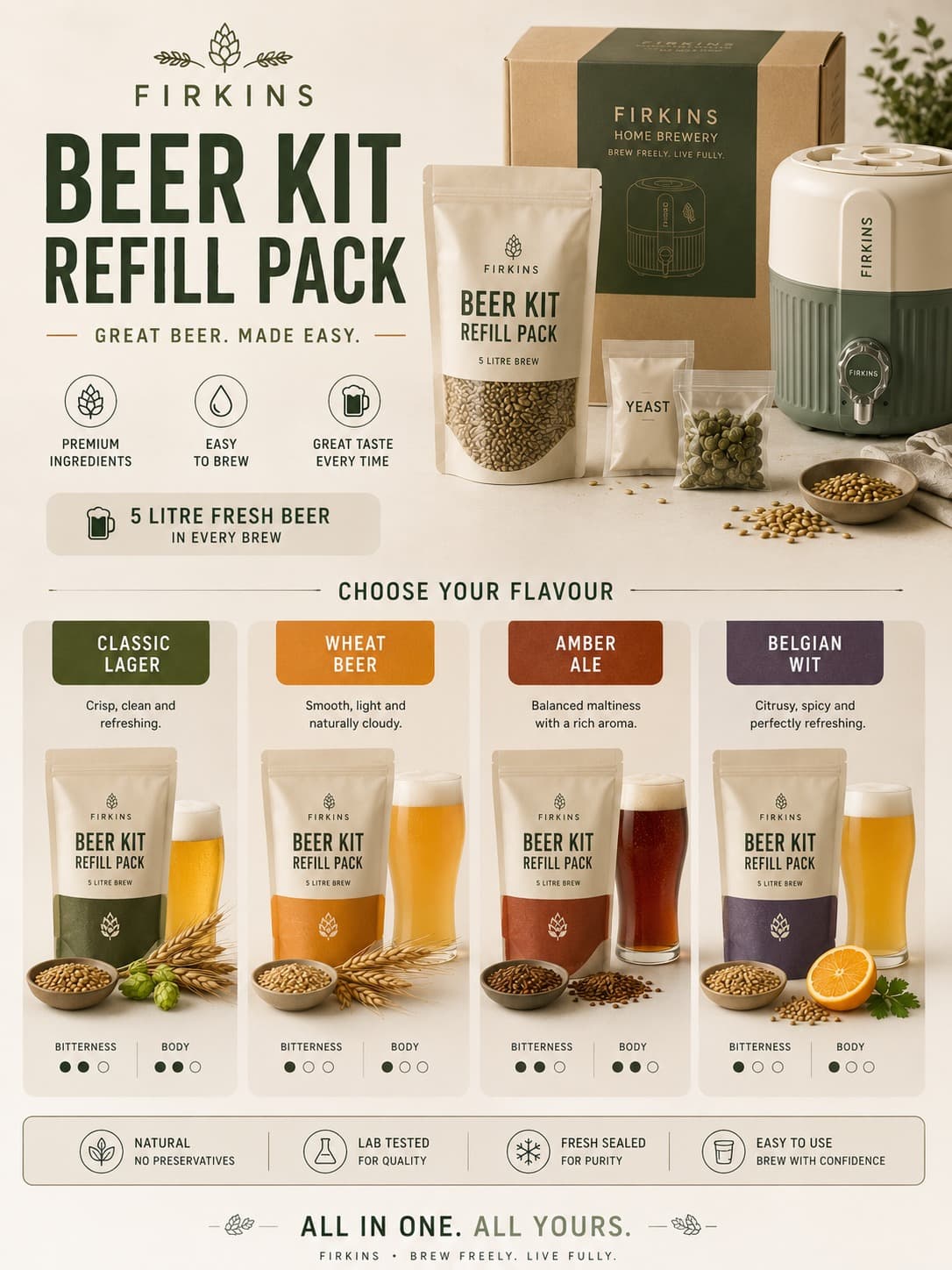
A pre-measured kit, a fermenter, ten days of patience. No equipment to source, no science degree required — just the soft satisfaction of pouring something you made yourself.
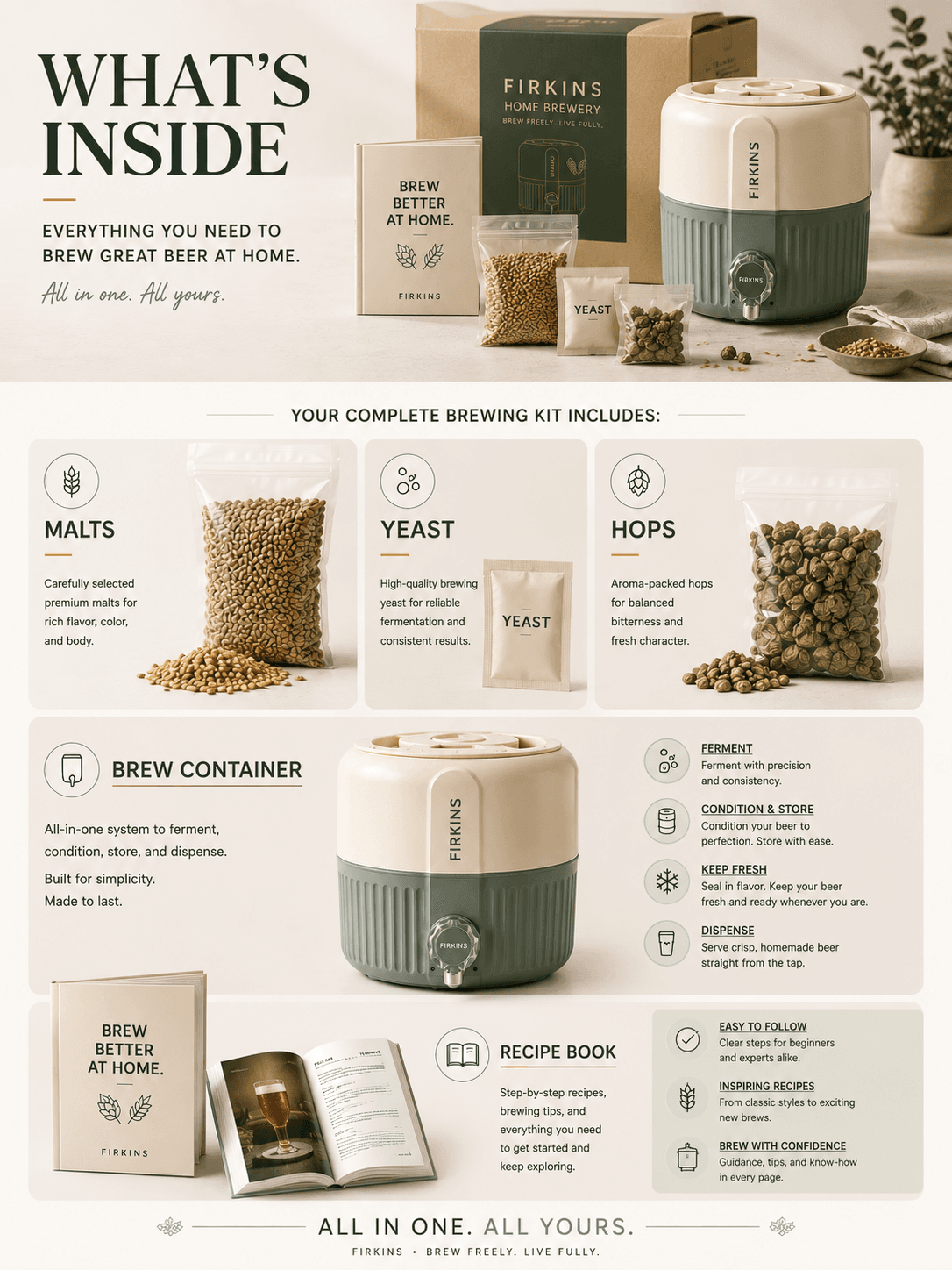
We wanted a first beer that wasn’t intimidating. Not a pilsner you can fail to nail, not a stout that takes a month. Something cloudy, friendly, and a little tropical — the kind of pint you drink on a porch in May.
The grain bill leans on flaked oats for a pillow-soft body. Magnum hops set a clean bitter floor; Cascade, Citra, and Amarillo build the orchard. A Belgian saison yeast (BE-134) lends a hint of pepper and pear without turning the whole thing weird.
— Brewed once, by us. Brewed many times, by you.
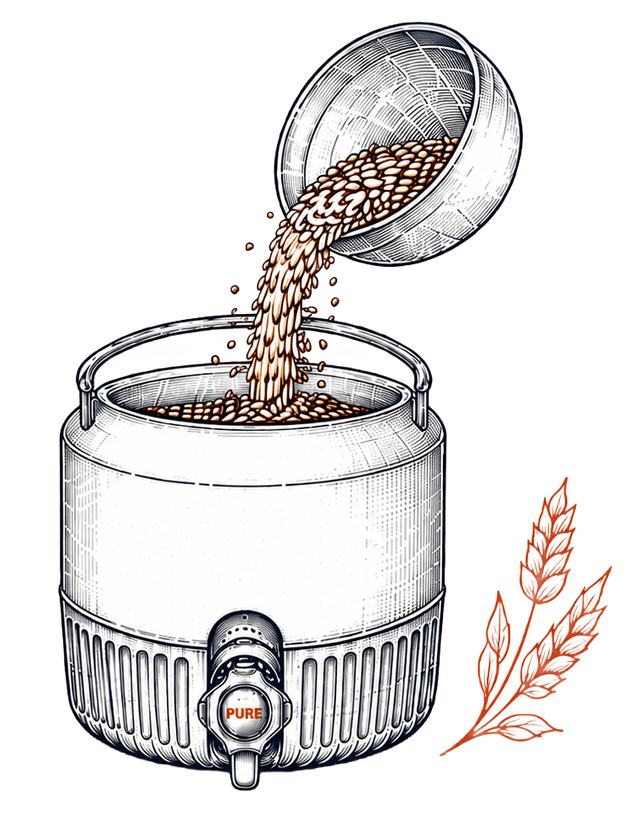
Tip your pre-measured malt, oats & hops into the fermenter. No weighing, no mess.
Top up to the etched line using the provided spring water. Stir to dissolve.
Drop in optional botanicals — orange peel, cold-brew coffee, vanilla pod. Your beer, your call.
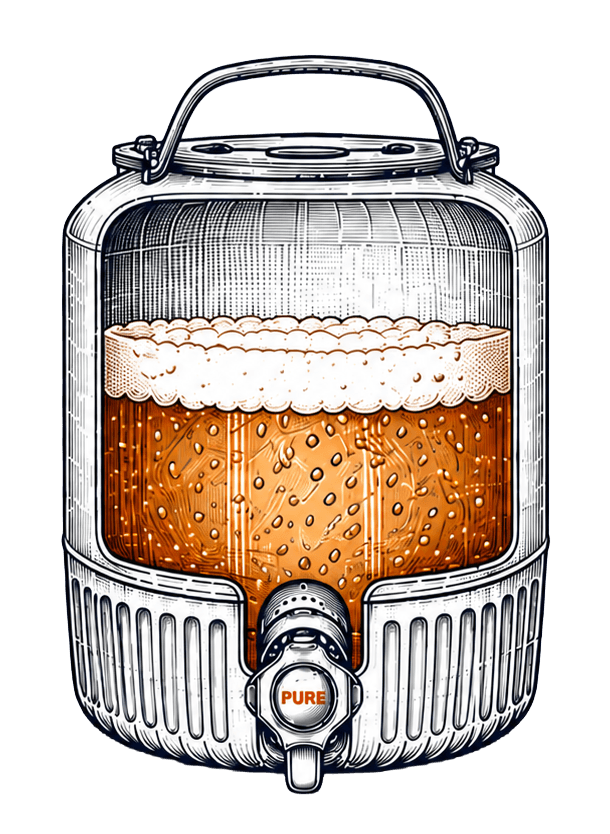
Pitch the yeast, seal the airlock, set it on the counter. It will hiss politely while it works.
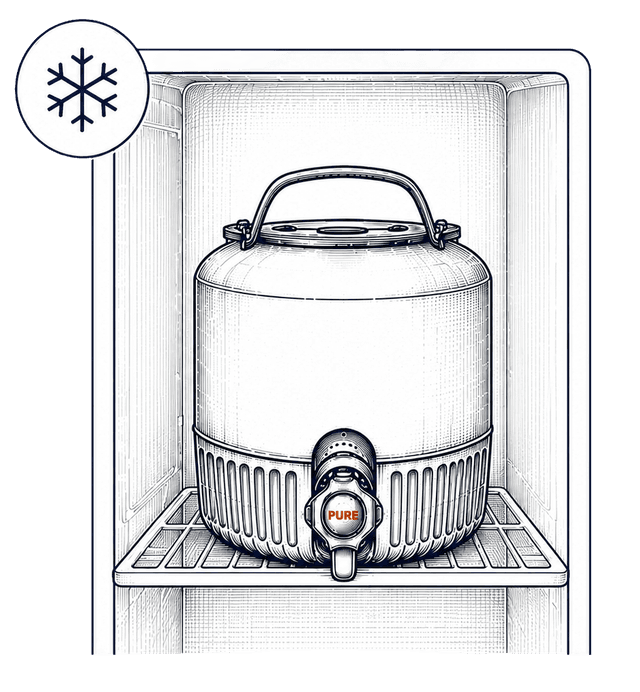
Eight days in the fridge. The cloudiness drops, the flavours marry, the beer becomes itself.
Tilt a chilled glass, pour slow, let the head crown. You made this. Hand one to a friend.
Yes. Every kit ships with pre-sanitized equipment and a single-use yeast sachet — the same components commercial breweries rely on. The fermenter has a one-way airlock, so nothing can wander in.
Just a kettle and a fridge. Everything else — fermenter, airlock, bottles, caps, sanitizer tablets — comes in the box.
After the kit, refill sachets are about ₹400 for a 2L batch. Each pint works out to roughly the price of a cup of coffee.
Soft, hazy pale ale. Tropical and citrus-forward from the hop trio, gently spiced from the Belgian yeast, smoothed out by the oats. Closer to a juicy IPA than a lager.